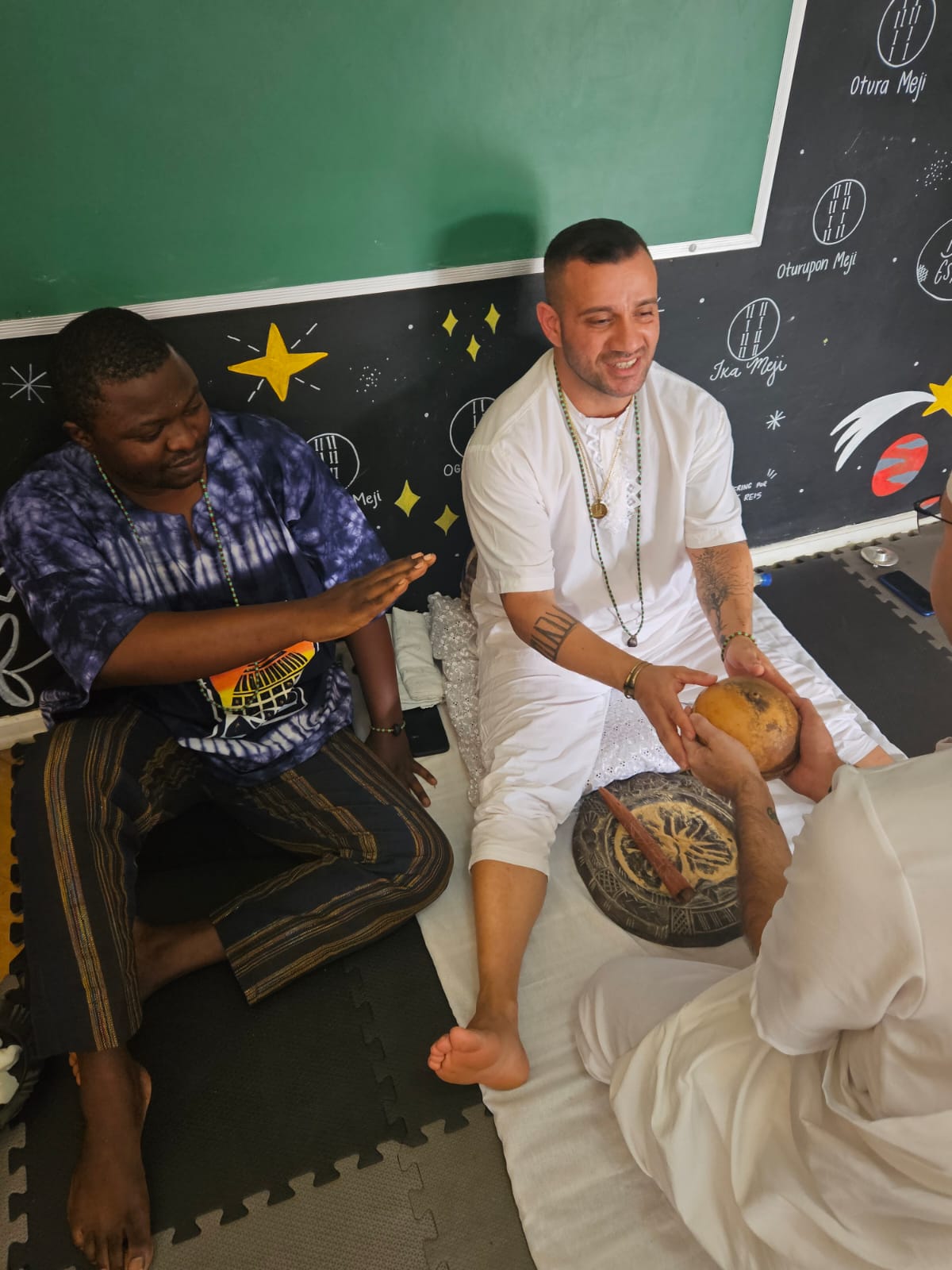
One of the subjects that frequently generates discussion within contemporary Ifá circles is Ifá Ẹlẹ́gàn, particularly in relation to women and their participation in Ifá initiation. However, one of the first misconceptions that should be clarified is that Ifá Ẹlẹ́gàn is not exclusively for women. While many lineages traditionally perform Ifá Ẹlẹ́gàn for women, there are also numerous men—including recognized Babaláwo—who have received Ifá through the Ẹlẹ́gàn process. In fact, some Ilé Ifá preserve Ifá Ẹlẹ́gàn as their principal or only form of Ìtẹ́fà for both men and women. Therefore, it is inaccurate to present Ifá Ẹlẹ́gàn as a rite reserved solely for women.
It is equally important to distinguish Ifá Ẹlẹ́gàn from Ìṣẹ́fà (Hand of Ifá Or Ọrunmila as mostly known). The two are not the same. Ìṣẹ́fà ESTABLISHES a relationship with your Orí through the reception of consecrated Ìkín Ifá, while Ifá Ẹlẹ́gàn is regarded by the lineages that practice it as a complete form of Ifá initiation. As such, it should not be confused with simply receiving consecrated Ìkín or with introductory stages of Ifá practice.
Generally speaking, Ifá Ẹlẹ́gàn is understood as a form of Ìtẹ́fà that does not involve the presence of Odù and certain elements associated with Ìgbódù during the initiatory rites (Òrò Ifá). While the initiate receives the blessings, responsibilities, spiritual authority, and relationship with Ifá associated with initiation, the ritual process differs from the forms of Ìtẹ́fà practiced in lineages where the presence of Odù forms part of the initiation process. This distinction is one of practice rather than necessarily one of spiritual value.
As with many aspects of isese spirituality, there is no single universal approach. Different towns, lineages, compounds, and families have preserved different customs. Some lineages strongly maintain Ifá Ẹlẹ́gàn primarily for women, while others preserve it for both men and women. Some lineages practice forms of Ìtẹ́fà involving Odù, while others do not. Such diversity has always existed within Ìṣẹ̀ṣe, where local customs, ancestral agreements, and lineage histories shape the way rites are transmitted and preserved.
What remains consistent across these traditions is the recognition that jwomen have always occupied important positions within the spiritual life of the Yorùbá people. As mothers, priestesses, diviners, custodians of sacred knowledge, healers, elders, and leaders within various Òrìṣà traditions, women have played indispensable roles in preserving and transmitting indigenous wisdom. Discussions surrounding Ifá Ẹlẹ́gàn should therefore not be approached as debates about superiority or inferiority, but as opportunities to better understand the diversity of initiatory systems that exist within the larger framework of Yorùbá spirituality.
Like many subjects within Ifá and Òrìṣà traditions, Ifá Ẹlẹ́gàn requires careful study, respect for lineage traditions, and a willingness to learn. Understanding begins when we approach these matters with curiosity rather than hostility, and with scholarship rather than assumptions. The ultimate goal should be the preservation of wisdom, the honoring of ancestral traditions, and the continued flourishing of Ìṣẹ̀ṣe for generations yet to come.