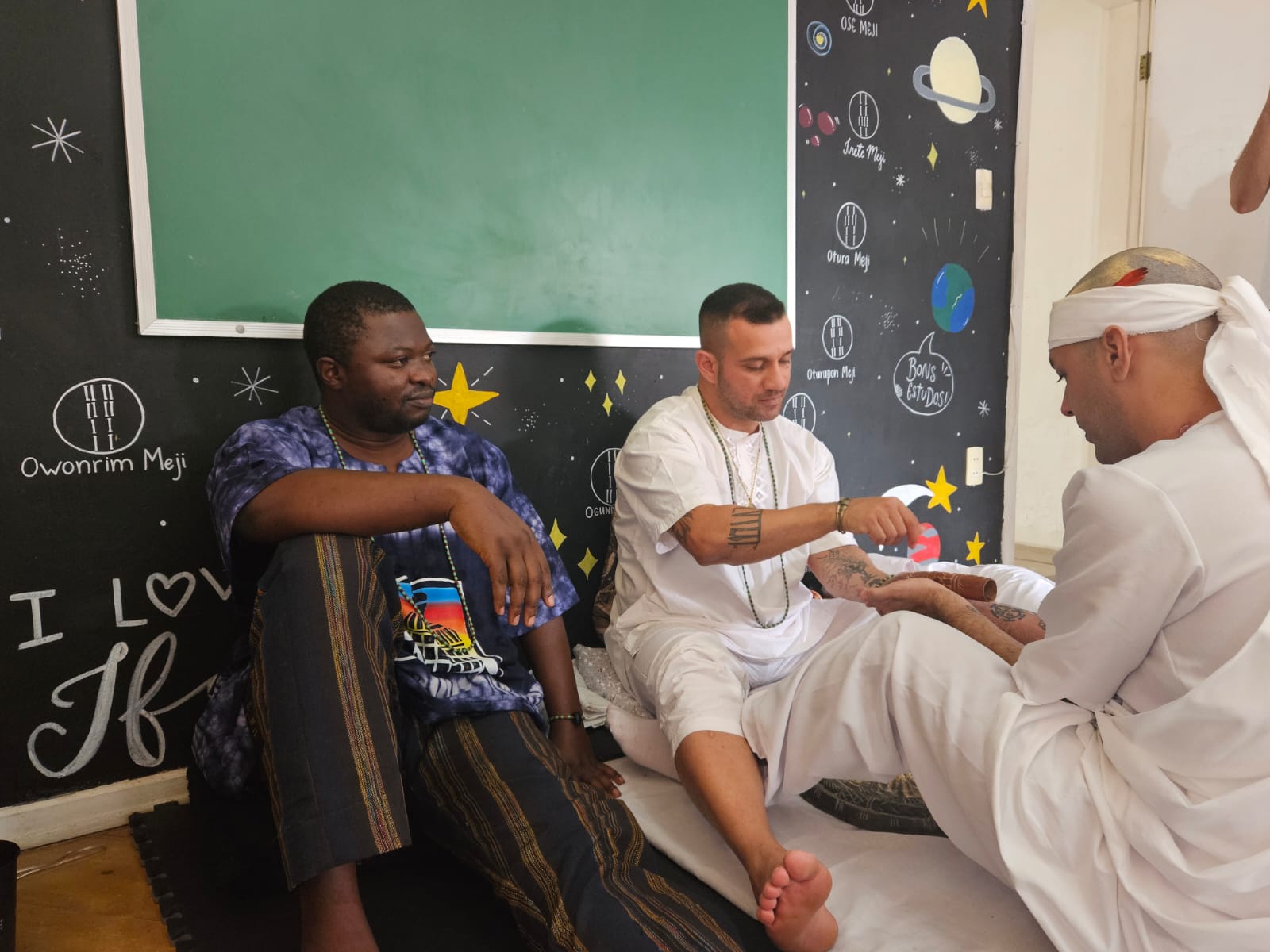
Ikin (Ìṣẹ́fà) Is Like a Newborn Baby — A Tabula Rasa
One of the ways I explain Ìṣẹ́fà is that the consecrated Ìkin received during the process is like a newborn child. It is a fresh beginning, a new relationship, and a new stage in one's spiritual development. It should not be burdened with assumptions that properly belong to later stages of Ifá initiation.
A newborn child arrives as a tabula rasa—a blank slate. While that child carries destiny, potential, character tendencies, and ancestral influences, much of its life story has not yet unfolded in this present earthlife. The child must grow, develop, learn, and experience life. In the same way, the consecrated Ìkin of Ìṣẹ́fà represents the beginning of a relationship between the individual and Ifá, not necessarily the complete revelation of that individual's spiritual manuscript.
This understanding is one of the reasons some lineages do not assign even temporary taboos, reveal lifelong restrictions, or provide the deeper revelations associated with Ìtẹ́fà during the process of Ìṣẹ́fà. The Ìkin has just been received. The relationship has just begun. The journey is only starting.
This does not mean that the Ìkin is powerless or without significance. On the contrary, the consecrated Ìkin is alive with spiritual potential and serves as a sacred bridge between the individual and Ifá. Through it, ìwúre are offered, guidance is sought, and alignment is cultivated. However, there is a difference between beginning a relationship and fully unveiling the deeper mysteries of destiny.
Just as a child must grow before certain responsibilities, knowledge, and expectations are placed upon them, the spiritual journey also unfolds in stages. The person develops, gains experience, studies, receives guidance, and gradually matures in understanding. Over time, deeper dimensions of Ifá become accessible.
This is why I often say that the consecrated Ìkin of Ìṣẹ́fà should be viewed as a sacred beginning rather than a final destination. It is the planting of a seed, not the harvesting of the fruit. The seed contains immense potential, but that potential must be nurtured through study, discipline, character development, prayer, sacrifice, and spiritual growth.
When viewed from this perspective, Ìṣẹ́fà becomes an invitation into a lifelong journey of learning rather than a conclusion. It is the opening chapter, not the entire book. The relationship with Ifá begins there, but the deeper revelations unfold through time, commitment, and continued spiritual development.
Like a newborn child, the consecrated Ìkin arrives full of possibility. What follows depends upon how the relationship is cultivated, how the teachings are applied, and how convincingly one walks the path that Ifá gradually reveals.