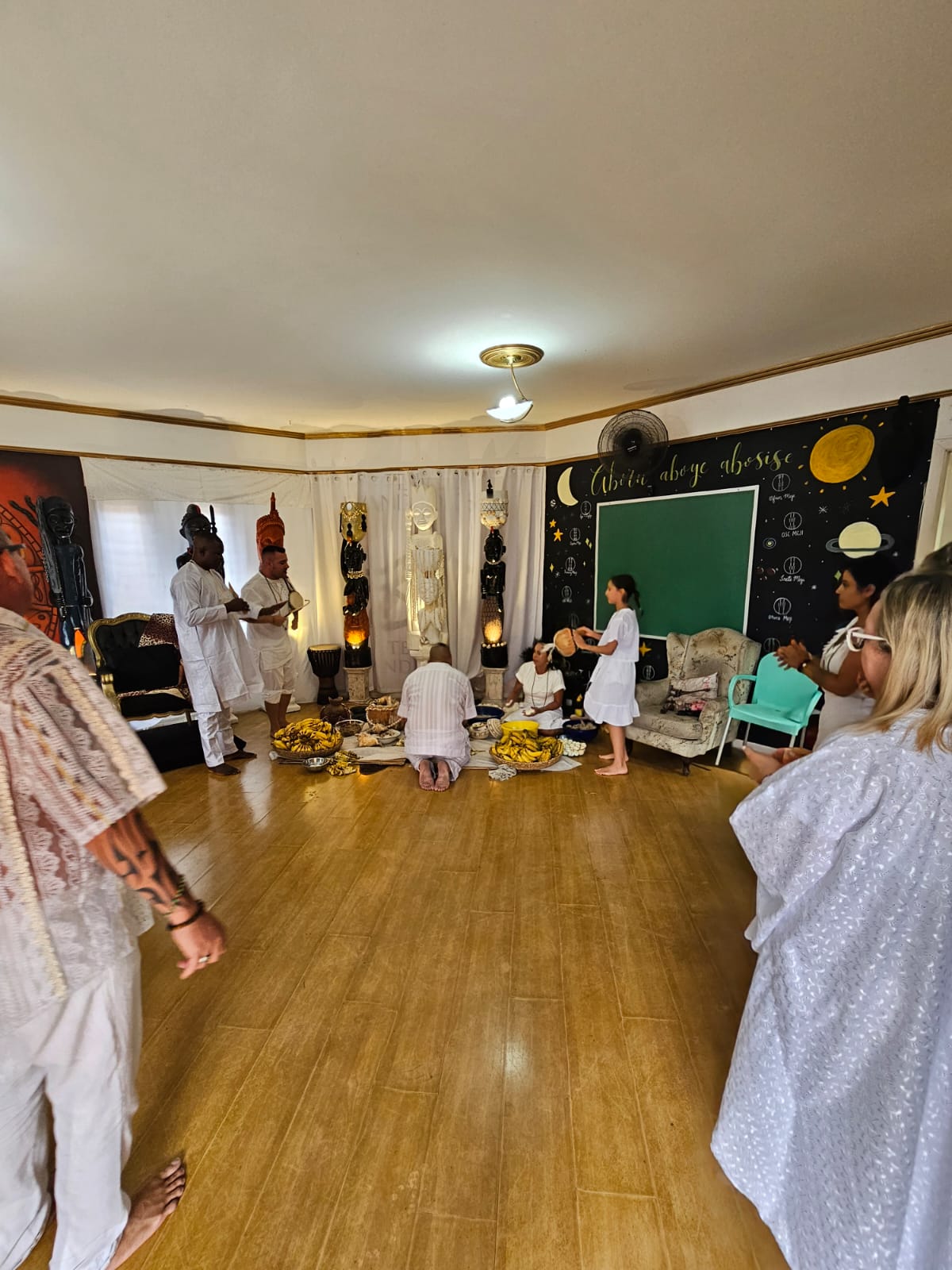
AKÓNÍLỌ́GBỌ́N / OJÙGBỌ́NA: YOUR FIRST TEACHER INSIDE ÌGBÓDÙ
One of the most sacred relationships established during Ìtẹ́fà is the relationship between an initiate and their Akónílọ́gbọ́n, known in many other Yorùbá communities as the Ojùgbọ́na. Although different lineages use different names, they refer to the same sacred office and perform the same indispensable functions within Ìgbódù, the sacred space of Ifá initiation. In my own lineage and hometown, we call this person Akónílọ́gbọ́n. The word itself is deeply meaningful. Akóni means "one who teaches," while Ọgbọ́n means "wisdom." Together, Akónílọ́gbọ́n literally means "the one who teaches wisdom." This title is not merely honorary; it describes one of the most important and respected responsibilities within the entire initiatory process.
Every person who passes through Ìtẹ́fà should have an Akónílọ́gbọ́n or Ojùgbọ́na. From the moment an initiate enters Ìgbódù, the Akónílọ́gbọ́n becomes their closest guide. While the Oluwo oversees the initiate's spiritual birth into the mysteries of Ifá, the Akónílọ́gbọ́n remains constantly by their side, patiently explaining each stage of the process and helping them understand the responsibilities that accompany their new spiritual life. Just as a newborn child cannot immediately understand the world into which they have been born, a newly initiated person also requires someone who will teach, nurture, encourage, and guide them through the first steps of their spiritual journey. That responsibility belongs to the Akónílọ́gbọ́n.
It is important to understand that your Akónílọ́gbọ́n is not chosen randomly. According to the deeper philosophy of Ifá, it is your Orí that chooses your Akónílọ́gbọ́n. Long before your physical initiation takes place, your Orí has already aligned you with those who will play significant roles in your destiny. Just as your Orí guides you toward your Oluwo, it also guides you toward the teacher who will nurture your spiritual growth inside Ìgbódù. What may appear to be coincidence is often destiny unfolding according to divine order. This is one more reason why the relationship should never be treated casually or taken for granted.
The work of the Akónílọ́gbọ́n extends far beyond the rituals performed during initiation. Many people mistakenly believe that their responsibility ends once the ceremonies have concluded. This is far from the truth. The Akónílọ́gbọ́n is first and foremost a teacher. They explain. They correct. They encourage. They answer questions. They demonstrate. They help transform sacred ceremonies into practical understanding. During the period spent inside Ìgbódù, they teach the initiate how to relate to their newly received Ifá, how to care for their sacred objects, how to conduct themselves as an initiate, and how to begin living according to the responsibilities of their spiritual rebirth. More importantly, they begin teaching what is perhaps the greatest lesson in all of Ifá—how to awaken one's Orí.
Receiving Ifá is not the conclusion of one's journey; it is only the beginning. The greatest responsibility after initiation is not merely learning rituals or memorizing Odù, but learning how to live in conscious alignment with one's Orí. This lifelong process begins under the guidance of the Akónílọ́gbọ́n. Through their teachings, the initiate learns discipline, humility, patience, observation, reverence, and proper conduct. They learn how to carry themselves as someone who has entered into a deeper relationship with Ifá and with their own destiny. These lessons may appear simple at first, yet they become the foundation upon which the rest of one's spiritual life is built. Knowledge without guidance often produces confusion, but the Akónílọ́gbọ́n bridges the gap between initiation and understanding.
The relationship between an initiate and their Akónílọ́gbọ́n is not meant to end when they leave Ìgbódù. It is a lifelong relationship built on mentorship, gratitude, and mutual respect. As the initiate grows, new questions arise, new responsibilities emerge, and new challenges appear. During these moments, the wisdom and experience of the Akónílọ́gbọ́n continue to provide direction. This relationship should never be taken for granted. Just as we never forget the parents who brought us into the physical world, we should never forget those who nurtured us through our spiritual birth. Your Akónílọ́gbọ́n was present during one of the most significant moments of your life, and that bond deserves to be honored throughout your journey.
Unfortunately, some initiates become so focused on learning new verses, seeking new teachers, or pursuing higher titles that they gradually neglect the very people who first guided them. This should never be the case. Make time to check on your Akónílọ́gbọ́n. Call them. Visit them whenever possible. Make Ìwúre for them. Ask about their well-being. Express your gratitude and continue to cultivate the relationship. These seemingly simple acts are profound expressions of Ìwà Pẹ̀lẹ́—balanced character. Gratitude is not merely good manners; it is a spiritual principle. Relationships such as these form part of a person's spiritual wealth, and an initiate who values them often receives blessings that cannot be measured materially.
In today's world, many people believe that everything can be learned from books, videos, websites, or social media. While these resources are valuable, they can never replace living relationships. Books transmit information, but teachers transmit wisdom. The Akónílọ́gbọ́n does not simply teach procedures; they model patience, discipline, humility, reverence, and the proper application of knowledge. Much of what an initiate becomes is learned not only through formal instruction but also through observation. This is why mentorship has always been central to the preservation of Ifá. Wisdom has never been preserved solely in books; it has been preserved through living teachers who dedicate themselves to raising the next generation.
As your knowledge grows and your responsibilities increase, never allow familiarity to destroy respect. Never allow titles to replace gratitude. Never allow success to make you forget those who contributed to your spiritual growth. Your Oluwo gave you spiritual birth, while your Akónílọ́gbọ́n taught you how to begin living that new life. Both occupy sacred positions within your journey. Both deserve honor. Both deserve gratitude. Both deserve remembrance.
If you have passed through Ìtẹ́fà, take a moment today to remember your Akónílọ́gbọ́n or Ojùgbọ́na. Reach out to them. Thank them. Honor them. Make Ìwúre for them. Continue to value the relationship that helped shape your spiritual foundation. For in honoring those who taught you, you honor your Orí, you honor your lineage, and you honor Ifá itself.
Abọrú Abọyè Abọ̀ṣíṣẹ̀.